Author: tinietim

THE SACKED ONE.

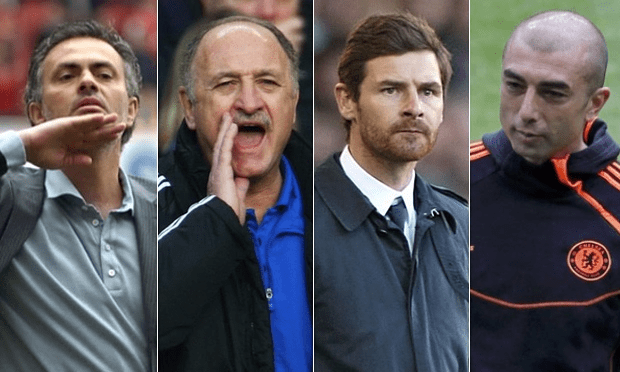
So Mourinho has been sacked, and the world wants to know – who will fill the special one’s boots?

The Blues, and Abramovich, have a great history of sacking. No seriously, it works!

MOURINHO GOES, GRANT IN (THE FIRST TIME)

Lets go back to 2007, the first time Mourinho was sacked. Under the Portuguese manager, from 2004 – 2006, Chelsea won their first league title in half a century, and followed it up with another, and had claimed the FA Cup and League Cup. Yet tension has been mounting as Mourinho’s relationship with owner Roman Abramovich became increasingly irritable. The manager caused further quarrel over the appointment of Avram grant as the director of football, a role that Mounrinho opposed. The hierarchy were infuriated over the managers’ behaviour and, with Chelsea fifth, Mourinho was sacked after a disappointing Champions League draw against Rosenborg.

Avram Grant replaced Mounrinho and despite losing to Manchester United in his first league game, Chelsea would go on to lose only one game in 32 under Grant in the Premier League. That season under Avram Grant, Chelsea finished 2nd in the Premier League, were runners up in both the League Cup and the Champions League.

SCOLARI LOST THE DRESSING ROOM AND THE DUTCH MAN FOUND IT

The Brazilian, Scolari, never got to grips with club management at Chelsea. Fan favourites John Terry and Frank Lampard were the biggest names amongst the sceptics that were confused by the managers’ methods. Scolari barely lasted 7 months. The final straw was a nil nil draw against Hull City at Stamford Bridge where the Blues had only won 6 in 13 home matches. Chelsea, at the time, were 4th in the table and still remained in the FA Cup and the Champions League. The Brazilian was gone.

Dutchman, Guus Hiddink, would replace him as interim manager. He is the favourite to take the job again following the sacking of Jose Mourinho this afternoon. Under Hiddink, Chelsea lost only once in 23 matches. He lead the team to a successful Champions League campaign, reaching the semi final only to be put out by FC Barcelona. The Light Blues finished 3rd in the league and won the FA Cup.

THE INEXPERIENCED BOAS, REPLACED BY HIS APPRENTICE DI MATTEO

It all seemed too much for André Villa – Boas. The manager attempted to revamp the squad, while facing constant challenges and opposition during his first taste of Premier League football. The clubs experienced players were quickly dissatisfied with Boas methods’ and the teams’ performance suffered because of it. Results began to decline, Chelsea slid down the table while others moved up. Villa – Boas suffered a 3 – 1 first leg defeat to Italian side, Napoli, in the knock out stages of the Champions League. Soon after, his team would slump to a 1 – 0 away defeat at West Brom. This was the final nail in the coffin. The decision was made, and Boas was gone.

His replacement, and club assistant, Di Matteo would make a lasting impression on the West London club. The Italian had a great relationship with the Chelsea players, and this helped restore some faith amongst the experienced players that were heavily criticised during Boas reign. The league form never really recovered and Chelsea finished in 6th place – the lowest position under Abramovich. However, Di Matteo will forever be remembered for his magnificent cup double. After a poor start Chelsea finished he season as FA Cup winners and under Di Matteo the club won their first European Cup beating Bayern Munich on penalties. Perhaps, Abramovich should have sacked Mourinho sooner – you never know!

SO WHO IS NEXT?

Juande Ramos and Guus Hiddink are the favorites to succeed Jose Mourinho at Stamford Bridge, but Pep Guardiola is the long-term bet. Carlo Ancelotti, Rafael Benitez and even Brendan Rodgers have been named as contenders for the job.

Whoever it may be, the replacement for the most successful manager in the club’s history must ensure safety in the Premier League and hope for a prolonged and successful Champions League campaign.

Chelsea will return to domestic competition when they play Sunderland on Saturday at Stamford Bridge (3pm KO).


THE GREAT ESCAPE: Champions League Preview

Olympiakos v Arsenal, Wednesday 9th December (7.45pm KO)


Arsenal require a win against the Greek outfit this evening to progress through to the last 16 of the Champions League knock out stages.


Last night Manchester United crashed out of Europe’s elite football competition after a 3 – 2 away defeat to VfLWolfsburg. This sent shockwaves around Britain. How could a club of this stature be prematurely KO’d from the Champions League, a competition they won merely 7 years ago?


Will the Gunners suffer the same fate?


Arsenal can only qualify for the last 16 as Group F runners-up if they better Olympiakos 3-2 win at the Emirates.


A 1-0 or 2-1 win will not be enough. The Gunners require 3-2 or a higher score line to give them a better head-to-head record than their Greek rivals in the group.


With this score line, Arsenal would then finish above Olympiakos on overall goal difference.


The Stats

  • In Greece, Arsenal have drawn one and lost four of their last five games


  • The Gunners have won seven and lost four of their last 13 European away fixtures


  • Olympiakos are aiming to progress to the knock out stages of the Champions League for the second time in three seasons.


  • Olympiakos are currently unbeaten in six home Champions League ties against English opposition; winning five of those games


YOU GOTTA HAVE FAITH!!


There have been many great escapes in Champions League folklore, from which Arsenal can draw strength.


Here are some of the best.


FC PORTO 2003/2004


FC Porto after being crowned UEFA Cup winners in season 2002/2003 began their attack on the UEFA Champions League under the leadership of a young, Jose Mourinho.


The Portuguese side did not get off to a good start in their first group game against Partizan. Porto drew one all with the Serbians in their away fixture. There home leg against Real Madrid seen Jose Mourinho’s side hammered 3 – 1. All seemed lost, until the young Mourinho wielded his magic and defeated French side, Marseille in a double header (3 – 2 away then 1 – 0 at home). Porto would later go on to win 2 – 1 at home against Partizan and draw with Real Madrid at the Santiago Bernabeu.


After the home defeat to Real Madrid left the Portugese side one point from two games all seemed lost. But eventually, Porto stormed through the competition taking a staggering 10 points from a possible 12.


Porto went on to reach the final in Germany, and were crowned the Champions of Europe defeating Monaco 3 – 0.


LIVERPOOL 2004/2005


In their opening group match Liverpool comfortably won 2 – 0 against Monaco. The Reds struggled to pick up points in Greece however, and Olympiakos finished them off with a 1 – 0 win. Liverpool again struggled to make the grade, and drew 0 – 0 at Anfield against Deportivo La Coruna. That meant Liverpool had only taken four points in three games.


In the return leg against Deportivo away, Liverpool won 1 – 0. However defeat at Monaco meant that Liverpool required a victory by two clear goals against Olympiakos (sound familiar?).


Liverpool initially went behind after a well worked Rivaldo free kick. This set piece set the stage for one of the most dramatic comebacks in Liverpool’s and Champions League history.


Liverpool scored two minutes after the game restarted through Florent Sinama-Pongolle. The second goal came from Neil Mellor who scored in the 81st minute. The Reds needed a goal, and who better to pop up and deliver it than Captain Fantastic himself – Steven George Gerrard.


25 yards out, dying minutes of the game, in front of the Kop and boom – GOAL!!


3 – 1 Liverpool.


Of course, if you know your history, the Reds later went on to produce arguably the greatest Champions League final ever. Does anyone remember the certain heroics of one Jerzy Dudek? Simply unforgettable.


WERDER BREMEN 2005/2006


The German side collected merely four points from five games during their Champions League campaign. Going into their final fixture against Greek side Panathinaikos they needed a victory, of four or more goals and Barcelona to beat Italian side Udinese. To summarise, they needed a miracle. And by God, did they get one.


The Germans battered Panathinaikos 5 – 1, they has done their bit. Barcelona however left it late to seal a victory over Udinese, scoring twice in the final 5 minutes of the match.


Bremen would later be knocked out by Juventus in the last 16 but they gave us a hell of moment to remember.


OLMPIAKOS V ARSENAL 2015/2016


Will there be another great escape?


Arsenal awaits their fate this evening. If they do drop out of the competition it will be the first time in 16 consecutive seasons.


The Gunners will have to progress without star striker Alexi Sanchez and midfielder Santi Carzola. Arsenal did secure a comfortable 3 – 1 at home against Sunderland at the weekend taking the London side to 2nd place in the Premier League. They will have to build on that confidence and their success in domestic competition to give them any sort of chance of completing the great escape.


“Que sera sera, whatever will be, will be.

The Future’s not ours to see. Que sera, sera!”

 

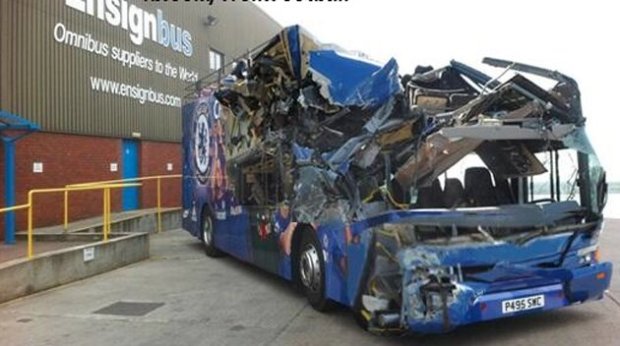
Have Chelsea lost the keys to the bus?

Substitute, Glenn Murray, has just scored one of the most memorable goals in the history of AFC Bournemouth and in the history of the English Premier League.


AFC BOURNEMOUTH: The Premier League Rug Rats


The Cherries have just defeated the current champions of England’s top flight division in their own back yard. A headed goal on the 82nd minute has shocked the football world! This is a game they will never forget!


There were heroic performances all over the pitch today. The Cherries played the Blues off the park at times, and matched them in every way. Artur Boruc, who has been under a lot of criticism since the start of the season, produced a memorable performance between the sticks and managed to successfully preserve his clean sheet. Manager Eddie Howe has Bournemouth supporters gushing over the cherries style of play. The team have struggles to produce positive results, but their performances have simply been a breath of fresh air this season.


CHELSEA FC: The Premier League Pensioners


Chelsea Football Club, the current league holders, are now sitting 14th in the league merely 3 points away from the relegation zone. AFC Bournemouth, a team who are competing in the top flight of English football for the first time in their history, is now only 2 points away from the league champions. This is a massive result for AFC Bournemouth, and these crucial 3 points have lifted the club out of the dreaded relegation zone.


The Blues have attained only 15 points in 15 games, and have lost a total of 8 games this season. This places Chelsea 11 points away from 5th place Tottenham Hotspurs (minimum European place)  and 17 points away from current league leaders Leicester City, who have had a phenomenal start to their season.


CHELSEA FC: The Collapse


The Special One, Jose Mourinho, is now under tremendous pressure from the fans. It seems he has misplaced the keys of the old Chelsea bus. The team have conceded 24 goals in the Premier League this season. Last season the Blues only conceded 32 goals over the entire season.


There is no question that the challenge for the top four is over for Jose Mourinho; a fall out with your captain and team doctor are sure signs of turbulence at any football club. The Chelsea captain, John Terry, has offered 20 years of service at Stamford Bridge and this season has been shut out of the team by Frenchman, Kurt Zouma. His substitution at half time against Manchester City at the beginning of the season seemed to “shock” the Chelsea captain, yet he backs manager Mourinho to return the London based club to form. As much as the captain may back his boss, his boss has not returned the favour. Terry has only made 8 league appearances this season.


Chaos has surrounded Chelsea Football Club and manger, Jose Mourinho, since the beginning of the campaign 2015/2016. A stadium ban from the Football Association prevented The Special One from entering the Britannia Stadium back in November. This ban was issued after being dismissed to the stand during a 2 – 1 defeat to West Ham United in October. Furthermore, Mourinho was issued a £50,000 fine by the FA for comments he made about ‘cowardly’ English officials. These comments followed after a defeat by Southampton in October.


Mourinho found himself in more trouble after former club doctor Eva Carneiro filled a legal claim against the Chelsea gaffer. Carnerio has claimed that Mourinho used derogatory language against her and that the manager was instrumental in effectively demoting her by having her dropped from first-team duties. This row between the manager and his staff has cast a cloud that has overseen the worst title defence in Premier League history.


There have been positive signs for the manager. Club owner, Roman Ibramovic, has stated that he has complete confidence in Mourinho and that the manager has the full backing of the clubs owner. Furthermore, despite the scepticism of the mainstream media the manager and his players insist that there is no unrest in the dressing room.


Overall, Mourinho has had to deal with a plethora of headaches this season. The injury of first choice goalkeeper Thibaut Courtois back in August has certainly not been ideal. Mourinho has also been let down by key players in Eden Hazard and Diego Costa.


Costa has proved to be nothing of a nuisance for Mourinho. A fight after a win against Tel – Aviv and a refusal to warm – up before a game against your London rivals in not the best way to impress a manager, or indeed the fans of your club especially when you are struggling to find form. These antics have led to Costa being dropped for games, and rightly so. But it begs the question: has The Special One lost the dressing room?


Eden Hazard had a phenomenal season last term, however this year the Belgian international has struggled to find form. Last season in the Premier League Hazard found the net on 14 occasions. This year he is yet to score in any of the 4 competitions he has been involved in with Chelsea this season.


CHELSEA FC: What’s next?


Well in 4 days time Chelsea will return to their home ground, Stamford Bridge, to face Portuguese side Porto in the Champions League. A side Jose Mourinho knows all too well, having previously led the Portuguese outfit to European success. Chelsea needs to avoid defeat to advance in the competition. After that there is the small task of facing current league leaders, Leicester City.


We shall have to wait and see whether the so-called ‘The Special One’ manages to find his keys before facing Jamie Vardy and Co at the King Power Stadium on Monday 14th December. Set your watches, this could be an absolute Christmas cracker!!


WHO ATE AWW’ THE PIES?!

This afternoon Leeds United supporters will conduct a protest against a ‘PIE TAX’ when they face Hull City at Elland Road in the Yorkshire Derby (3pm KO).


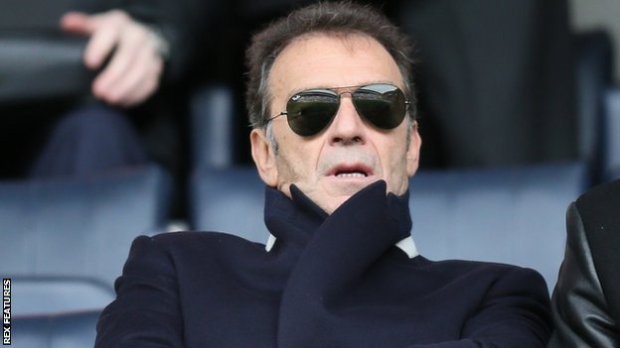
Leeds owner, Massimo Cellino, has increased the ticket price of the South Stand by £5. This £5 increase will include a food voucher, intended as an incentive to encourage supporters to use the clubs catering facilities.


The fans are simply outraged at the owners’ decision to enforce the new ticket price, without consultation.


This new price will be applied to today’s fixture against Championship rivals, Hull City. Supporters in the South Stand will now be obliged to pay an increased price of £32 for the luxury of watching their home side, in contrast to supporters in the North Stand who will pay the usual £27. However, they will have the comfort of a half time pie – this is assuming that the loyal supporter wants to eat a pie at half time.


To be honest this incentive provides more ammunition for the case of Fan Ownership in football. This ‘pie tax’ surely has to be the last straw for a football club who for the worst part of 15 years have suffered from financial mismanagement and poor ownership. To pay an extra fiver for the price of your ticket you would be expecting a better seat, better players, or a better manager. This is simply ludicrous governance. I would think if you were seeking to encourage supporter attendance, and overall buy in from the support, then you would sell tastier pies at a reduced cost. But that seems too far fetched.


Owner, Massimo Cellino, is by no means a popular figure at Elland Road. His controversies have lead to the Football League banning the chairman from running the club on not one but two separate occasions. The first ban occurred in December 2014, after Italian courts found the owner guilty of tax evasion. The chairman appealed against the decision but was unsuccessful. The second ban occurred in October 2015. Again, the owner submitted an appeal against the decision but it appears he has so far been unsuccessful. Finally, to cement his undying love for Leeds United, last month the chairman vowed to no longer attend fixtures and removed his interest in selling the club to the supporters group, Leeds Fans United.


It is clear that Cellino has no loyalty to the club, and shows complete contempt to the Leeds support. The Whites have been made to endure the hardest of times and it goes without saying that they simply deserve more.


There is no question that the club would have fell to rubble by now had it not been for the loyalty of the fans. Football clubs are like no other business on the planet. If you use a product and you don’t particularly like it, then you change it and try a new one. This does not happen in football. Football is part of our identity, it is our cultural grandstand. The Leeds fans have proved this today. Even with the ‘pie tax’ the loyal support SOLD OUT their South Stand, and every home fixture welcomes 20,000 loyal whites. These supporters MUST be rewarded for their undying and lasting loyalty to their football club.


Leeds United is far from the riches and royalties of the Premier League; the club currently sits 17th in the Championship. The supporters must fight their majority share holder, Cellino, and take over the governance of their once proud club. For too long they have suffered at the hands of turbulent mismanagement, discouraging the club from gaining any form of stability or transparency. Perhaps a greater victory would be to win the battle, and for now, lose the war.


http://www.bbc.co.uk/sport/0/football/35006222


http://www.telegraph.co.uk/sport/football/teams/leeds-united/11951721/Massimo-Cellinos-ever-changing-moods-are-holding-Leeds-United-hostage.html


http://www.telegraph.co.uk/sport/football/teams/leeds-united/12032063/Leeds-Uniteds-pie-tax-is-an-abuse-of-supporters-loyalty.html


http://metro.co.uk/2015/12/03/leeds-united-owner-introduces-mandatory-pie-tax-for-supporters-buying-a-match-ticket-5541279/


http://www.bbc.co.uk/sport/0/football/34721028


http://www.yorkshirepost.co.uk/sport/football/hull/despite-pie-tax-leeds-south-stand-sold-out-for-hull-derby-1-7606384


“We’re top of the League and you’re no!”

Leicester City climbed to the top of the Premier League today with a 3 – 0 win over Newcastle United. The Foxes have successfully bagged 28 points in 13 games, sitting 2 points above last season’s league winners Manchester City. Surprisingly, this time last season Leicester were sitting bottom of the table, facing imminent relegation. Leicester City have scored in 14 consecutive league games, and on form striker Jamie Vardy has scored 10 goals in 10 games equalling Dutch star Ruud van Nistelrooy’s tally of successive goals, with the former Red Devil also scoring his 10th against Newcastle United at St James Park in 2003.

The Foxes came close to winning the biggest prize in English Association Football in 1929, only to finish the season as league runners up to eventual winners Sheffield Wednesday. But with a phenominal start to the season and no sign of Claudio Ranieri’s team dropping the ball anytime soon the anticipation and excitment is growing South of the border. Could this be Leicester City’s year, and will Jamie Vardy’s run of form ever end?

FOXES NEVER QUIT

PS. Good luck Manchester United, and Louis van Gaal.

Homophobia in Football: What’s the problem?

(I would like to highlight that the following information is drawn from a football perspective within England)


“If a player did come out, I think everyone would be supportive, but I’m 100% sure that people in the changing room would be joking, and that some would be ripping it out of him.  If there’s a gay player in our changing room, I’d understand why he wouldn’t come out.”

(Anonymous, professional League One player)


BBC Sport reported yesterday that Premier League executive Richard Scudamore supports the idea that openly gay footballers would be treated with respect in the Premier League.


This was a bold assumption from Scudamore, who has held his position as Chief Executive at the top flight of English Association Football for 16 years. Scudamore believed openly gay footballers would be treated with “tolerance” and “that the time would be right” to come out.


The Chief Executive however appeared ill informed on the subject. When discussing the gay footballer “coming out”, Scudamore questioned whether this language was appropriate and consistently referred to openly gay players as “them” and “they”.


There is only one openly gay player in English football. His name is Liam Davis, and he plays for Gainsborough Trinity. In an interview with BBC Sport in January 2014 Davis spoke about a fairly positive response from his team mates, opposition and fans. Davis stated that on the one occasion that he did encounter abuse from an opposition player, the player apologised for his behaviour after the match via a text message. During an interview with the Lincolnshire Echo Davis expressed his wishes that professional footballer Thomas Hitzlsperger would have “came out” before retiring in 2013. Davis did however admit, that the closer you get to the top flight then the harder it will be for players to be open about homosexuality due to greater media coverage and increased fan exposure. Davis seemed to be in the perfect community club environment to “come out”, and has received massive support from family, friends, team mates and the football club itself. However, the same cannot be said for others. And the fact of the matter is, out of the 2 million adults who participate in football every week in England only one is openly gay despite 1.5% of the English population being homosexual or bisexual. This does not support Scudmore’s statement, and it is plainly obvious that the environment in England is not entirely suitable for homosexual footballers.


Thomas Hitzlsperger, the former Aston Villa and German national player, also received positive responses upon coming out to the public.  This is a great thing, however Hitzlsperger never experience a match day response inside a Premier League stadium. So there is no telling how a crowd would respond. I would like to think the reaction would be positive, but past experience tells us otherwise. Justin Fashanu, England U21 International, came out as homosexual in 1990 – he was the first footballer to do so in the United Kingdom. He committed suicide at the age of 37, tragically, as a response to his sexuality.


Fundamentally, the difficulty with this subject is that gay footballers are the invisible minority. Popular football magazine FourFourTwo reported a survey of professional footballers who responded to the question, “Do you know any gay players?” 11% of the 123 players asked responded “Yes”.  (Please note that some Scottish Premier League players responded to this survey)


“A player confided in me and came out. I’ve kept my mouth shut. It’s none of my business. It’s no one’s business.”


This one response from a professional League Two player highlights the eagerness to protect gay footballers. This may seem like an act of kindness, but personally I believe this suggests a lack of tolerance in the English game.


The Gay Football Supporters Network (GFSN) was formed in 1989, “as a social network for LGB&T football fans across the UK.” The organisation uses football as a tool to tackle “homophobia, biphobia, and transphobia” on and off the football field. It has helped to establish LGBT supporters clubs, assisting the development of an inclusive and equal football fan experience. London based clubs, Arsenal FC and Tottenham Hotspurs, are two such clubs with LGBT supporters groups. The Gay Gooners and The Proud Lilywhites are the clubs official LGBT fan communities. These fierce rivals share solidarity and a common goal to create a safe and inclusive fan environment. BBC Newsbeat investigated LGBT supporters clubs in the Premier League in August this year. Excluding Arsenal FC, who formed the first Premier League LGBT group in 2013, BBC Newsbeat asked the remaining 19 clubs “if they had an official one connected with the club”. From the 11 respondents, 4 chose not to answer the question, 5 said that yes they did have LGBT fan groups and the remaining two stated that they didn’t have one at the current time.


Proud Lily Whites.jpg


GFSN have stressed that Premier League clubs are not doing enough to support their fans. Ed Connell, GSFN Chairman, is shocked at the number of Premier League clubs and officials (such as Richard Scudamore) who believe that homophobia in football is not a problem. Out of the Fields conducted the first International Study on homophobia in sport. The results were posted in May this year and despite the majority opinion, out of more than 9,000 people in the United Kingdom 77% claimed they had “witnessed or experienced homophobia in sport”.


Back to Richard Scudamore, the man who places blind faith on football and football fans to “tolerate” homosexuality. The statistics show little proof that coming out will be welcomed in English football. I hope I am proven incorrect, but I simply cannot support Scudamore’s thoughts. It is clear that we have a number of gay footballers who do not want to come out, for whatever reason. Clearly they are known to other professionals who they work with on a daily basis but they will not expose themselves to fans or the media. This highlights a significant problem with homosexual inclusion in English sport, particularly football. This problem isn’t exclusive to the football players alone, and football fans are seeking new ways to enjoy the sport that they love. Homosexual, bisexual and transgender fans are forming LGBT supporters groups in order to feel safe in Premier league grounds, and yet clubs, officials and executives are still denying that there is a problem. Without a shadow of a doubt Scudamore’s comments are ill informed and misjudged. I cannot say that I am a member of an LGBT group, but if I was I would not be very happy with my league executive for completely downplaying a very serious problem within football.


Reference


http://www.lincolnshireecho.co.uk/Gainsborough-Trinity-s-Liam-Davis-openly-gay/story-20431222-detail/story.html


http://www.theguardian.com/politics/reality-check/2013/oct/03/gay-britain-what-do-statistics-say


http://news.bbc.co.uk/1/hi/uk/87288.stm


http://www.gfsn.org.uk/news/beta-gay-players-11-of-players-know-one.html


http://www.tottenhamhotspur.com/news/formation-of-lgbandampt-fan-group-060214/


http://www.arsenal.com/fanzone/gay-gooners


https://proudlilywhites.wordpress.com/


http://www.bbc.co.uk/newsbeat/article/33760649/footballs-lgbt-fans-want-more-help-from-clubs


http://outonthefields.com/


Half and half shirts: what’s the problem?

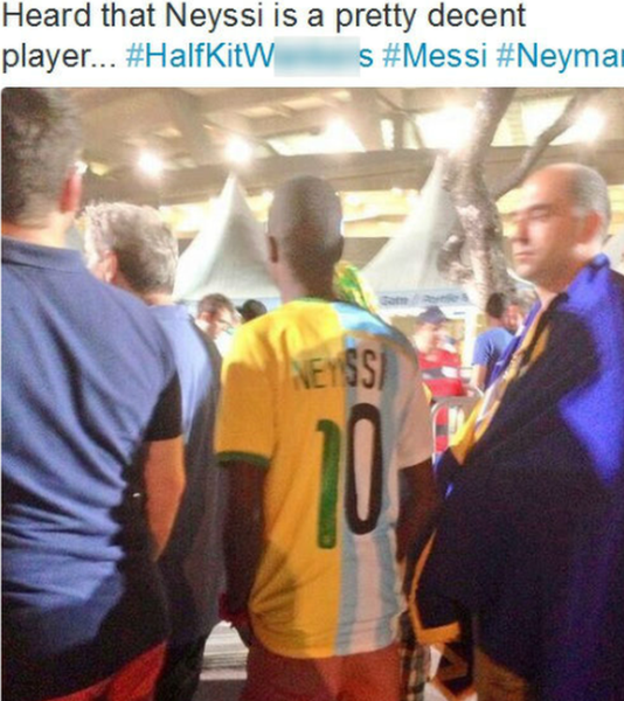
_86486330_halfhalf1A wind – up? An expression of dual identity? Or an expression of the impact of the global football market?
Many ridicule such an image, of a ‘football fan’ sporting a shirt with two club emblems on the chest, however you may be more alike than first thought.
How many people can truly say now that they support their local team? How many people even support their regional, or indeed their national team?
There is an ever increasing number of football fans supporting teams who occupy Europe, predominantely teams from Europes BIG FIVE, notably in Germany, Spain, Italy, France and England.
Mass media has allowed us to be consumed by football events, heroes and villians. Everyday we are emerged in a spectacle of footballing prowess, and those teams with the greatest amount of money and the greatest amount of power possess the loudest voice in our social world. It is therefore probable to assume that football is no longer as community based and tribal as it once was. Globalisation and immigration has been a huge factor in this also.
Is this a good thing?
Many people agree, and feel positively about getting away from footballs ‘tribal’ elements. Possibly believing it will alleviate violence, and ethinic difference.
Is it a bad thing?
Well it is changing the culture of the game. Fans are now involving themselves in the business of football like never before, and are being commodified by the vast media market. This goes against the age old tradition of being ‘born’ a fan which is charaterised by common footballing tales such as ‘cut me and i’ll bleed (insert team colours)’, ‘my Dad was a (insert team name) fan, so I am’ or ‘I was born here, so I support (insert team name)’.
Traditional fans don’t like this commodification of football fans, and more importantly they don’t like that “fans” are buying into it. Many struggle with the concept of having a ‘second team’. To many it’s unthinkable, but in the modern world it’s ordinary.
IMO.
I would love to live in a world without sky sports. I would love to have seen an international match with a minimum of 100,000 people standing under one roof watching the sport I love (From 1906 – 1914 Scotland v England managed this feat: never less than 100,000 attendance during this time).
Alas, these are changed days and we live in the age of digital media. However, I must side with the traditionalists. With dwindelling numbers at football grounds, and complete lack of local and national talent in the United Kingdom I only worry that collective identities soon become extinct. Of course football must celebrate multiculture diversity, which football has aspired to since the Bosman ruling (1995), but it should never lose sight of local and regional pride and identity.
All that from one kit, eh?
PLEASE LEAVE COMMENTS AND THOUGHTS BELOW.

British Association Football

History comes to life today in Scotland and England as 4 teams battle it out to win their respective national football tournament. 

The Scottish Cup was first held in 1873.  The trophy presented to the winner of the competition is the oldest in association football and the oldest national trophy in the world. The first team to win the Scottish cup was Queen’s Park in March 1874.

The first ever Scottish cup game was won by Kilmarnock, who beat opposition Renton 2 – 0.

The most successful club in this competition is Celtic, who have won the worlds oldest trophy 36 times.

The Football Association Challenge Cup ( commonly known as the FA cup ) is the oldest association football tournament in the world. The inaugural tournament was held in 1971.

Arsenal were the winners of the 1971 tournament.

Arsenal and Manchester United are joint leaders of the record number of tournament wins. Both sides have 11 FA Cup wins to their name.